OEM-Oriented Seat Belt Supply, Explained
The most detailed page on this site. What each component in a seat belt system does, what governs its selection, how integration with the vehicle shapes the answer, and what makes a procurement conversation productive.
What OEM-Oriented Seat Belt Supply Means
It describes a way of working, not a claim about who manufactures the part.
In automotive supply, “OEM-oriented” describes an expectation rather than a brand: components are specified against a defined application, supplied to a consistent description, and traceable to what was agreed. The buyer is not browsing — they are matching a requirement.
That expectation shapes the conversation. Instead of a part being selected from a list, the application is described first: which vehicle, which seating position, what the mounting arrangement looks like, what is being fitted or replaced, and in what quantity.
It also shapes what happens after the first order. An OEM-oriented buyer needs the second delivery to match the first. Where something must change, they need to know before it arrives, not after.
Our role is to work to that standard on the supply side: understand the application properly, propose components that suit it, be explicit about what is and is not established, and keep repeat supply aligned with what was agreed.
A note on terminology
Describing supply as OEM-oriented is a statement about method — application-matched selection, consistent description, traceable supply. It is not, by itself, a claim of appointment by any vehicle manufacturer, nor of any approval, certification or partnership. Where a specific approval matters to your project, please raise it directly so it can be addressed against your actual requirement.
The Components of a Seat Belt System
Select a component to see what it does and the considerations that usually govern its selection. These are the interfaces an enquiry needs to resolve.
Webbing
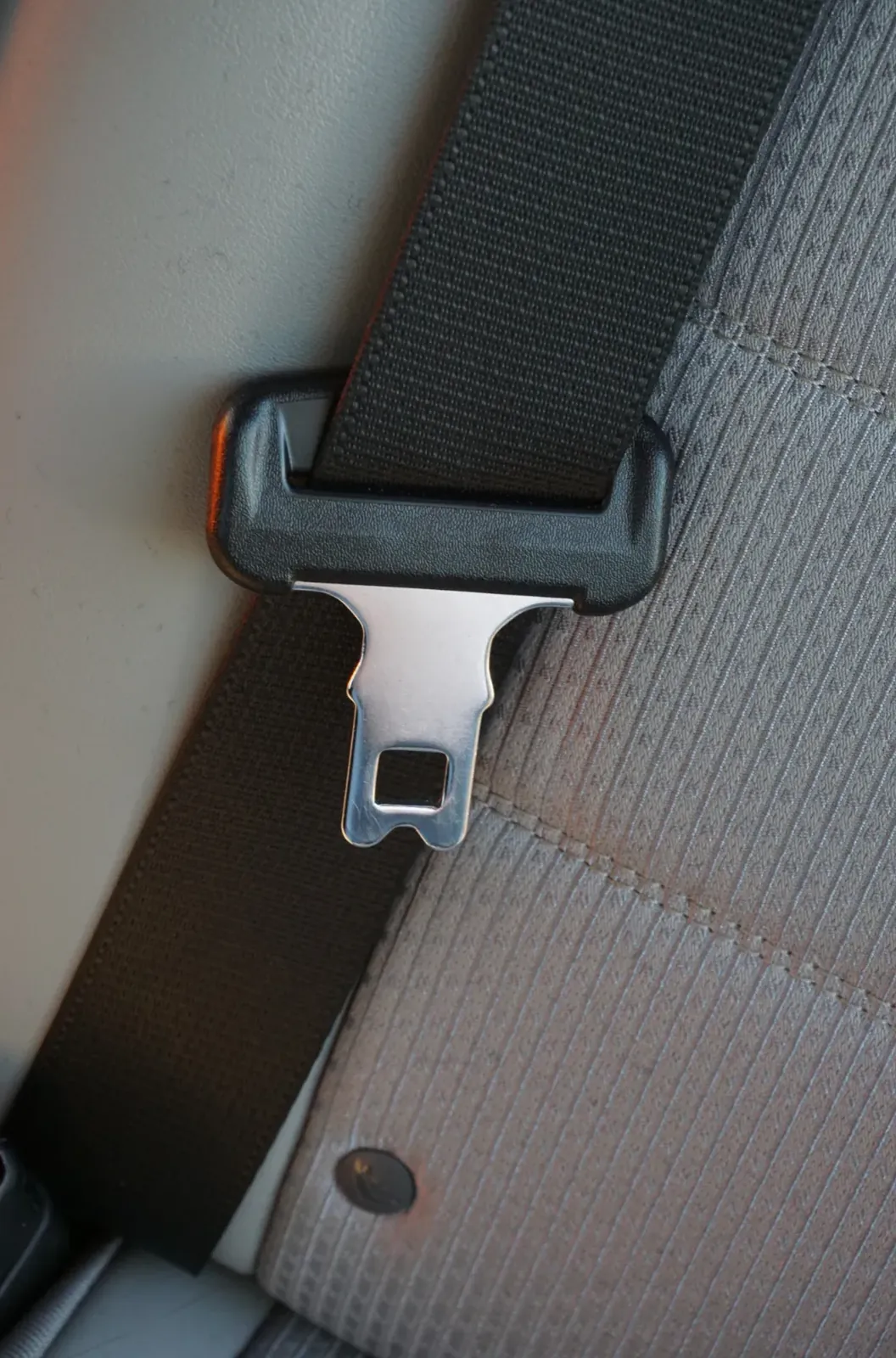
The woven strap that carries load across the occupant and transfers it to the rest of the system. It is the part of the belt the occupant actually touches, and the part whose condition is easiest to assess visually.
Selection is governed by what the rest of the system expects of it: the width the tongue and retractor are built around, the construction suited to the routing, and the length the belt path requires. Webbing is not a generic commodity within an assembly — changing it changes how the other components behave.
Typical considerations
- Width compatibility with the tongue plate and retractor spool.
- Length required by the belt path and seating position.
- Condition in service — cuts, fraying, chemical contamination or visible damage.
- Requirements applicable to the vehicle and market for the material used.
Retractor
The retractor stores the webbing and governs how it is paid out as the occupant moves and taken up when they do not. It is normally mounted low on the pillar or within the seat structure, with the belt routed from it up to the upper anchorage.
Because the retractor sits at one end of the belt path, its mounting arrangement and orientation are tightly linked to the geometry of the installation. A retractor suited to one mounting position is frequently unsuitable for another, even where the belt itself appears similar.
Typical considerations
- Mounting arrangement, orientation and the space available for it.
- Belt path from the retractor to the upper anchorage.
- Retractor type appropriate to the seating position and application.
- Interface with the webbing supplied with or specified for it.
Tongue & Buckle
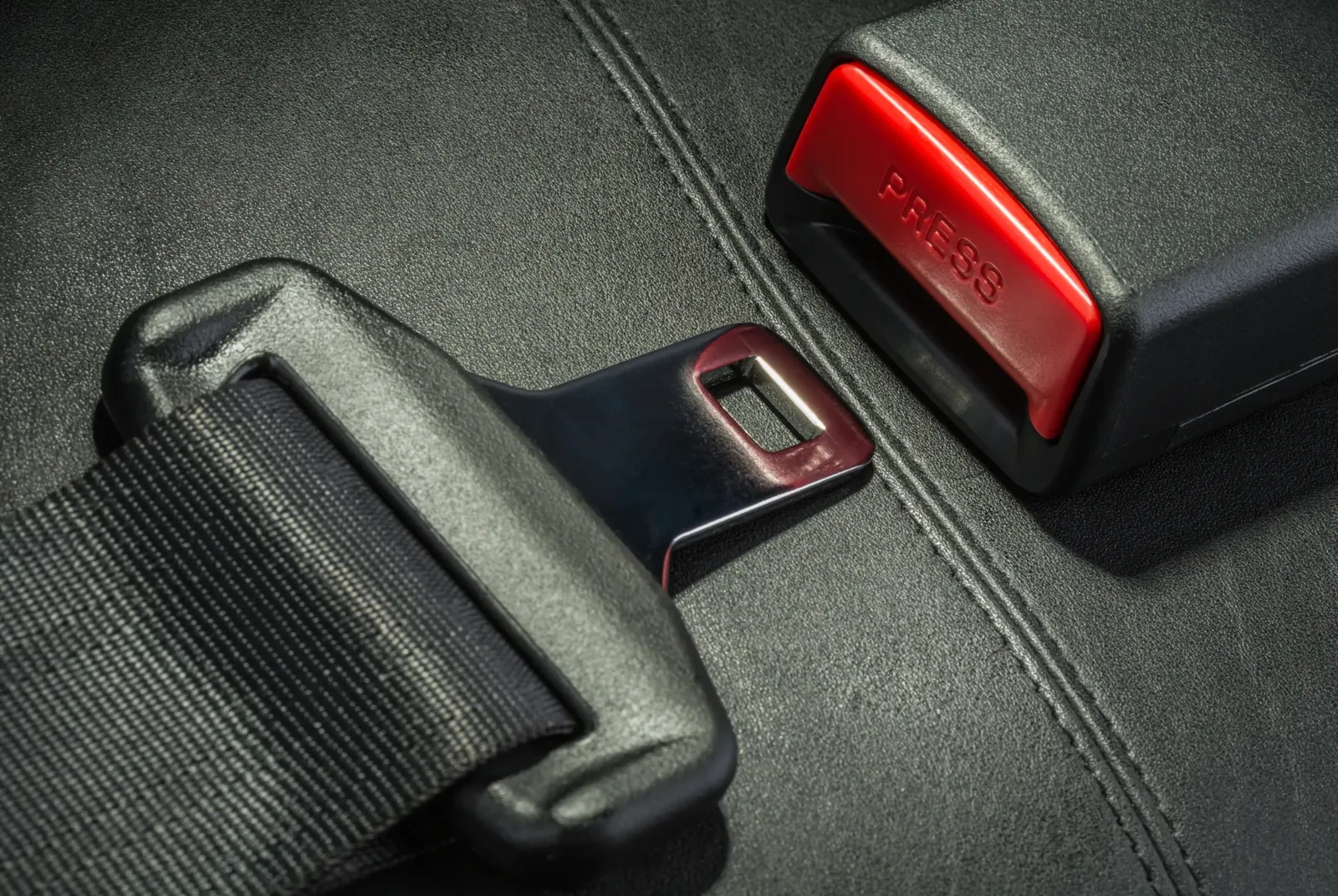
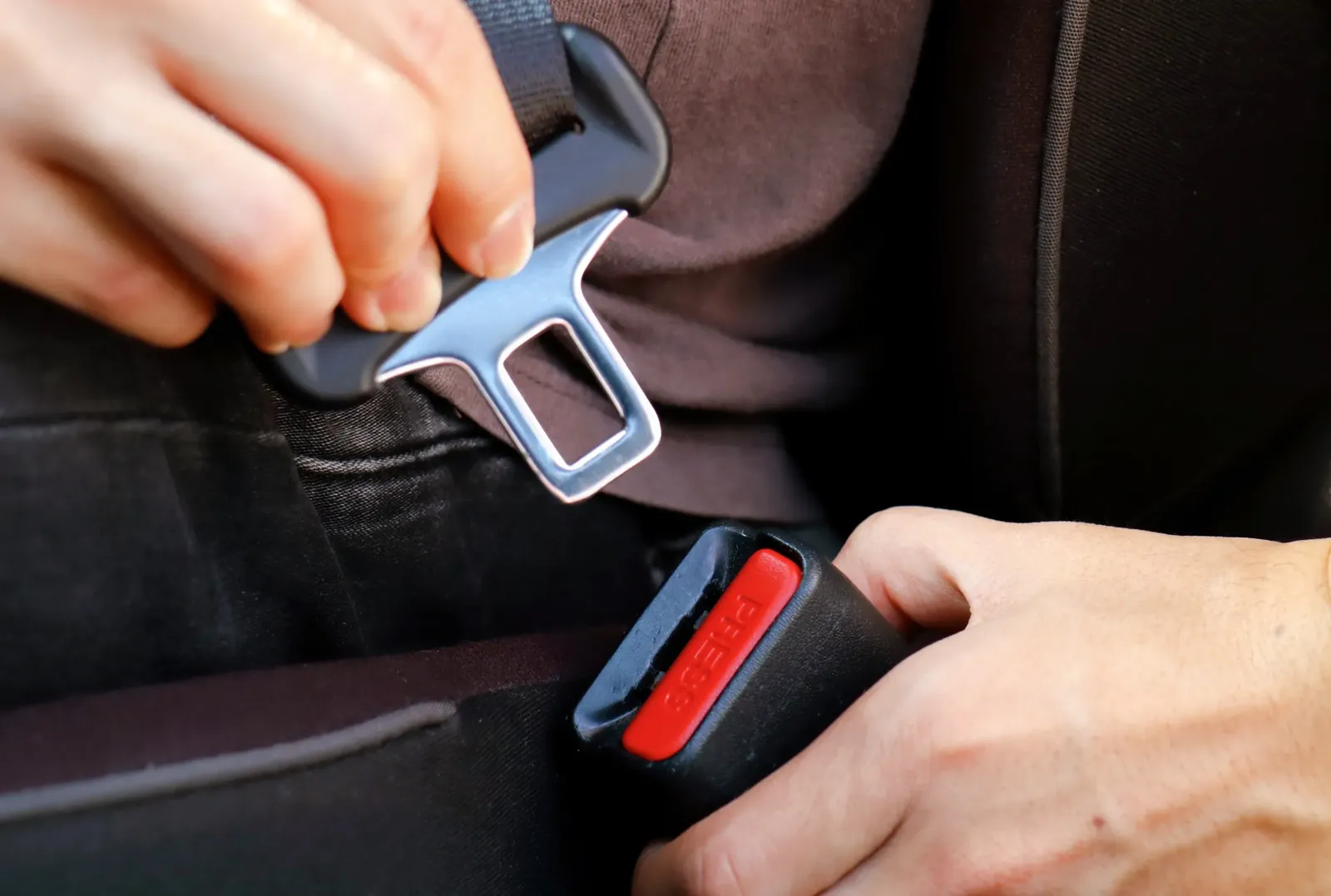
Together these form the latch that divides the belt into its shoulder and lap sections. The tongue plate travels on the webbing; the buckle is fixed to the vehicle or the seat and holds the tongue until released.
This pairing is the most common source of compatibility problems when components are sourced separately, because a tongue that physically enters a buckle is not necessarily the tongue that buckle was designed to retain. Tongue and buckle should be treated as a matched pair rather than two independent purchases.
Typical considerations
- Tongue plate geometry corresponding to the buckle mechanism.
- Buckle mounting — stalk, cable or rigid — and its length and orientation.
- Release accessibility for the occupant in the installed position.
- Clean, repeatable latching and release through normal use.
Anchorage & Mounting Hardware
Anchorage points are designed into the vehicle structure; the mounting hardware is what connects the belt to them. This is where belt load is transferred into the vehicle, which makes it the part of the system least suitable for improvisation.
Bolt specification, plate geometry, spacers and the orientation of the fixing are all governed by the vehicle's anchorage design. Where an application does not have a designed anchorage point for what is being fitted, that is a question for the vehicle manufacturer or a qualified engineer — not a sourcing question.
Typical considerations
- Anchorage points provided in the vehicle for that seating position.
- Fixing specification and any hardware supplied with the assembly.
- Plate geometry, spacing and orientation at the mounting face.
- Installation carried out to the vehicle manufacturer's requirements.
Guides & Height Adjustment
Guides, loops, trims and height adjusters shape where the webbing sits before it reaches the occupant. They rarely dominate an enquiry, but they determine whether the shoulder section sits where it was intended to.
These parts are closely tied to the vehicle's interior architecture, so they are usually specified alongside the trim and pillar arrangement rather than independently of it.
Typical considerations
- Compatibility with the pillar or seat structure they mount to.
- Effect on shoulder-section position for the occupants expected.
- Webbing running freely through the guide without binding.
- Trim and cover parts that form part of the same requirement.
The Assembly as a Set
Considered individually, each component above has its own selection logic. Considered together, they form one load path with a fixed sequence of interfaces — and it is the interfaces, not the parts, that cause most sourcing problems.
This is why assembly-level supply is often the more practical route. When webbing, tongue, buckle, retractor and hardware are selected as a matched set for a stated application, the interface questions are resolved once by the supplier rather than repeatedly by the buyer.
Typical considerations
- Whether the requirement is genuinely a single component or an assembly.
- Which interfaces have to be preserved against existing fitted parts.
- What is being carried over from the current installation and what is not.
- The description to be recorded so repeat orders can be matched to it.
Integration Considerations
A belt does not exist independently of the vehicle it is fitted to. These are the factors that most often decide whether a component suits an installation.
Seating Position
Front outboard, rear outboard, centre and folding positions each have different anchorage arrangements and belt paths. A component correct for one position is frequently unsuitable for another in the same vehicle.
Anchorage Arrangement
Where the anchorage points sit, how they are oriented, and what fixings they take. This is designed into the vehicle and governs the mounting hardware rather than being governed by it.
Belt Routing
The path from the retractor, through any guide or height adjuster, to the occupant and across to the buckle. Routing determines webbing length and how freely the belt runs.
Seat & Trim Interface
Seat structure, trim panels and pillar covers set the space a component has to sit within and how it presents to the occupant. Clearance is easy to overlook until fitment.
Operating Environment
Duty cycle, exposure and how often the belt is used affect what is appropriate. A vehicle in continuous multi-shift service does not present the same conditions as an occasional-use one.
Applicable Requirements
Requirements applicable to the vehicle, its category and its market govern what may be fitted. These should be established for the specific application through the appropriate route before components are ordered.
Planning Supply Rather Than Reacting to It
Component supply is easiest to keep consistent when the requirement is understood as an ongoing one rather than a series of unrelated orders.
- Establish the description once. Agree what is being supplied for which application, and record it, so later orders reference the same baseline.
- Separate the recurring from the one-off. Regular consumption and occasional replacements benefit from different handling.
- Give notice on volume changes. Advance visibility of a step up in quantity is what makes it deliverable rather than disruptive.
- Flag application changes explicitly. A change to the vehicle, seat or mounting arrangement restarts the selection question — it should not be assumed forward.
- State documentation needs up front. If your process requires particular paperwork with a delivery, it is far simpler to agree that before the first order than after it.
What to Send With an Enquiry
None of this is mandatory — but each item removes a round of questions. Send whatever you have; we will ask about the rest.
| Vehicle | Make, model, variant and year where known, or the vehicle category if the requirement covers a range. |
|---|---|
| Seating position | Front outboard, rear outboard, centre, folding or another arrangement — and how many positions the requirement covers. |
| Scope of requirement | Whether you need a complete assembly or a specific component, and what is being carried over from the existing installation. |
| Existing part references | Any part numbers, markings or labels on what is currently fitted. Often the single most useful item in an enquiry. |
| Photographs | The buckle, the tongue, the retractor and its mounting, and the anchorage points. Clear photographs answer questions text rarely can. |
| Mounting arrangement | How the retractor and buckle are currently mounted, and any constraint on space, orientation or clearance. |
| Quantity & timing | Initial quantity, whether it repeats, and any date the requirement is tied to. |
| Documentation | Anything your process requires with a delivery, so it can be agreed before the order rather than after. |
Ready to Put an Application In Front of Us?
Bring the vehicle, the seating position and whatever references or photographs you have. We will work from there.