Q / 01
Material Considerations
Component selection should consider the materials involved and whether they suit the operating environment — exposure, contamination and the conditions the installation actually sees in service.
// Automotive occupant restraint components & OEM supply
A framework rather than a claim. What quality considerations tend to cover when automotive safety components are specified and supplied, what that looks like on an actual order, and what we explicitly do not claim.
This page sets out the considerations that tend to matter when automotive safety components are specified and supplied. It is written as a framework for asking better questions of any supplier — including us — rather than as a list of claims about ourselves.
Nothing on this page should be read as a claim that Seat Belt OEM Supplier holds any particular certification, operates testing or laboratory facilities, carries out crash testing, or has obtained approval from any authority or vehicle manufacturer. We make no such claims.
Where a specific certification, approval or test evidence is required for your project, raise it directly with us and it will be addressed honestly against your actual requirement — including where the answer is that it sits outside our scope and should be sought elsewhere.
Depending on the application, some of these will matter a great deal and others barely at all. Establishing which is which is part of scoping the requirement properly.
Q / 01
Component selection should consider the materials involved and whether they suit the operating environment — exposure, contamination and the conditions the installation actually sees in service.
Q / 02
Whether what arrives on the second order matches what arrived on the first. For a repeat buyer this is usually the most consequential quality property, and the easiest to verify.
Q / 03
Whether the interfaces between components correspond as intended — webbing to tongue, tongue to buckle, retractor to belt path, hardware to anchorage. Incompatibility is a quality failure even when every part is sound.
Q / 04
Whether an assembly behaves as one unit: the belt runs freely, the latch engages and releases cleanly and repeatably, and nothing binds or fouls through its range of movement.
Q / 05
Whether the installation can be carried out as the vehicle manufacturer requires, using the anchorage points and fixings provided for it, by people competent to do the work.
Q / 06
What is checked on receipt, what record is kept of what was supplied, and what documentation accompanies a delivery. Applicable requirements should be evaluated for the specific application.
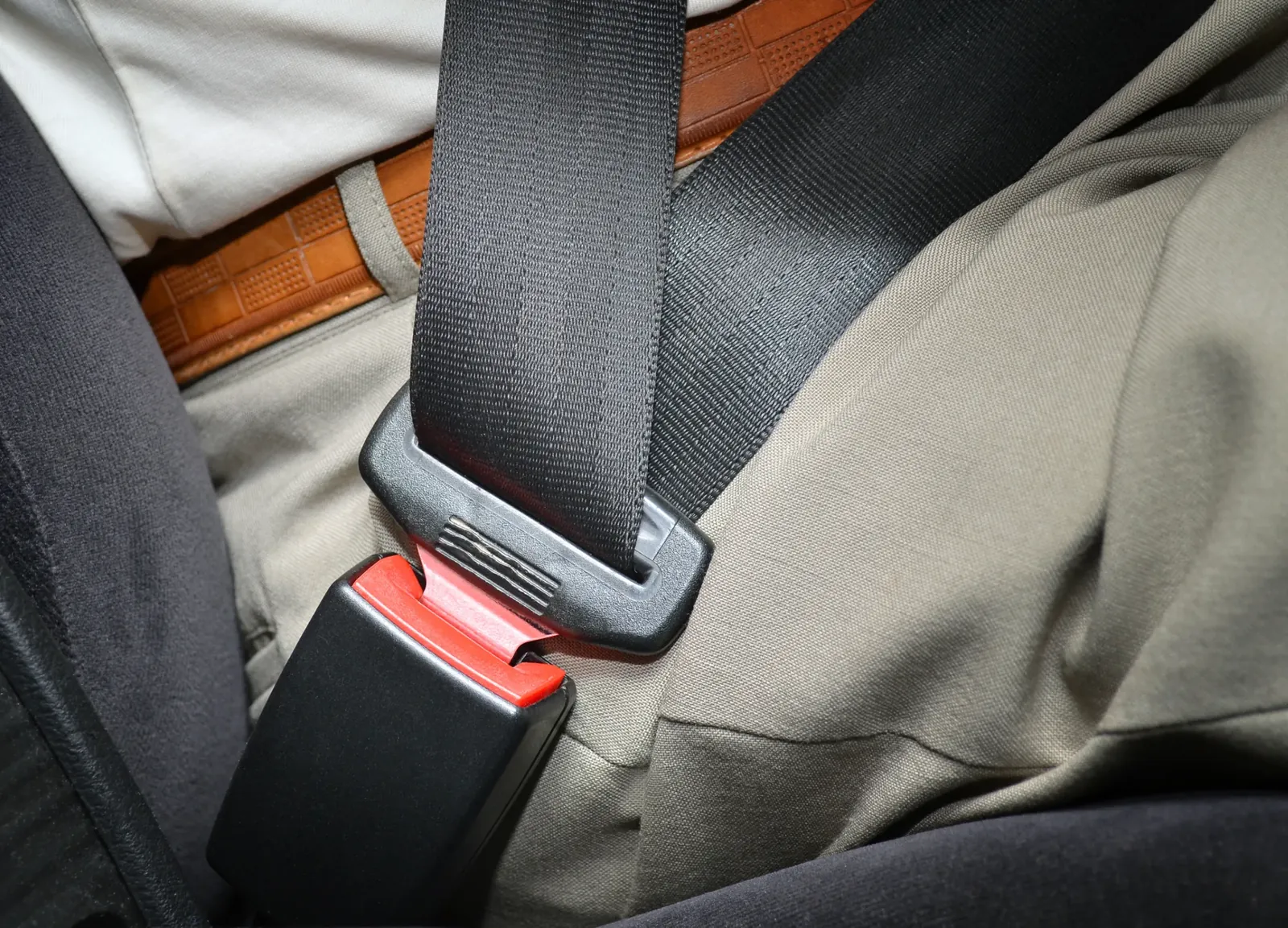
Translated from principle into what actually happens when you place a requirement with us.
Traceability requirements vary considerably between applications. Rather than assume a level, we work to whatever your process actually requires — established before the first order rather than reconstructed afterwards.
| Order record | What was supplied, against what description, for which application and on which date. This is the reference a later order is matched to. |
|---|---|
| Component references | References and markings carried by the components themselves, where these are present and relevant to your process. |
| Delivery documentation | Paperwork accompanying a delivery, agreed with you in advance according to what your receiving process requires. |
| Change notification | The route by which you are told if something about a supplied component changes between orders. |
| Application record | The application the supply was scoped against, so a change in the application can be recognised as a change rather than absorbed silently. |
| Requirements evidence | Where your project requires specific evidence, certification or approval, this should be defined at enquiry stage so it can be addressed directly — including where it falls outside our scope. |
General points for businesses assessing restraint components already in service. These are considerations, not a maintenance procedure — the vehicle manufacturer's requirements govern.

Nothing on this page constitutes installation, repair or inspection instructions. Restraint components should be installed, inspected and maintained in accordance with the vehicle manufacturer's requirements, by people competent to carry out that work.
Raise it at enquiry stage and it will be addressed honestly against your requirement — including where it sits outside our scope.